

Other Genres
Other Tags
- #AEO
- #AIEvolution
- #AIInMarketing
- #AIMarketing
- #AISearch
- #AITransformation
- #AnswerEngineOptimization
- #ArtAndEmotion
- #ArtAndLife
- #B2BManufacturing
- #B2BMarketing
- #B2BStrategy
- #BuyerJourney
- #BuyerPsychology
- #ChangingNorms
- #CinematicThinkinginBusiness
- #CMO
- #CMOInsights
- #CognitiveMarketing
- #ComfortZone
- #CompetitiveStrategy
- #ContentthatConnects
- #CreativeBlog
- #CreativeChaos
- #CreativeExpression
- #CreativeJourney
- #Creativeleadership
- #CreativitybuildsConsistency
- #DigitalTransformation
- #EmpathyinLeadership
- #Empowerment
- #EnterpriseSales
- #EthicsinCommunication
- #EverydayObservations
- #FOEvsFOMO
- #GenderBias
- #GEO
- #GlobalMarketing
- #Gratitude
- #GrowthMindset
- #GrowthStrategy
- #HerStory
- #HiddenFigures
- #ImpactfulStories
- #InclusiveLanguage
- #IndianWomen
- #LeadershipStorytelling
- #LifeLessons
- #LLMSearch
- #MarketingForFounders
- #MarketingLeadership
- #MarketingStrategy
- #MarketingThinking
- #MarktetingConcepts
- #MindsetShift
- #ModernWorkplaceDynamics
- #MomentuminCreativity
- #MultigenerationalLeadership
- #OrganisationalCulture
- #Organisationalmetaphors
- #Perfectionism
- #Personalgrowth
- #PersonalReflection
- #PerspectiveShift
- #PowerOfArt
- #PremiumPositioning
- #Productivity&AI
- #ProfessionalServices
- #Reflections
- #Relatablewriting
- #SearchMarketing
- #SelfBelief
- #SEO
- #SocialCommentary
- #SocialConditioning
- #STEMRoleModels
- #StoriesThatStay
- #StoryBehindStorytellers
- #Storytellers
- #StorytellingforTechnologists
- #StorytellinginMarketing
- #TechnologyTrends
- #ValuebasedPricing
- #VerticalAuthority
- #WomeninHistory
- #WomenInSTEM
- #WorkLife
- #WorkplaceEquity
- #WorkStories
- AI
- Branding
- Culture
- Design
- Elastic Marketing
- Employee Experience
- Employer Branding
- Founder-led Companies
- Gender Bias
- HubandSpoke
- IPO
- LeanMarketing
- Marketing
- Partner Marketing
- soulful stories
- Storytelling
- TosstheCoin

We are having fun with AI. Subscribe here to get a glimpse
Subscribe now(Part 3 of a Multipart Series
History’s Hidden Figures: The Women We Were Made to Forget)
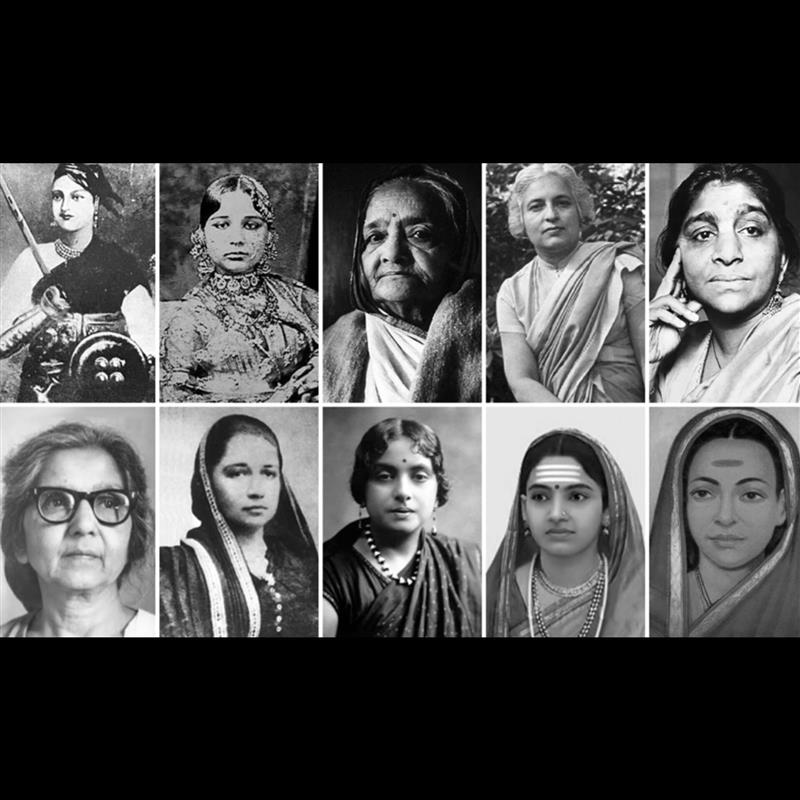
On March 10, the 129th death anniversary of Savitribai Phule passed in silence. No headlines, nor tributes! We need to start reading about these women—torchbearers we never learned about. We cannot afford to give up these names to history’s blindfolds.
March is International Women’s Rights Month—a time to celebrate progress, honor struggle, and name at least a few of the women who built the world we inhabit.
Here are eight Indian women whose names should echo in every classroom. Their portraits ought to hang in all halls of fame. Even as these women blew up impediments on their path to success with sheer talent and hard work, the world’s biases still refuse to record their struggles. Even when forced to honor their work and celebrate their art, the world has still successfully dodged acknowledging the injustice these trailblazers faced.
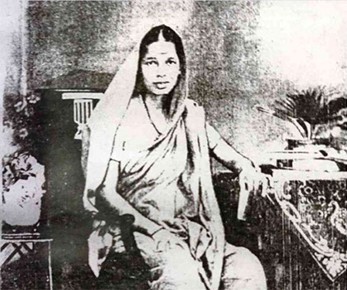
1. Savitribai Phule (1831–1897)
The Woman Who Turned Ink into Insurrection
Where She Began
Born on January 3, 1831, in Naigaon, Maharashtra, into an oppressed caste, Savitribai was married at nine to a 13-year-old Jyotirao Phule.
Degrees
- Self-taught with help from her husband
- Trained at two teachers’ training programs: the American missionary institution in Ahmednagar and at a Pune school
- India’s first professionally trained female teacher and headmistress
The Part They Couldn’t Erase
- Opened India’s first girls’ school in Pune in 1848
- Educated over 150 students across three schools by 1851
- Started over 18 schools, educating widows and other adults who were denied education
- Established an infanticide prevention center for pregnant widows (1853)
- Co-founded the Satyashodhak Samaj
How She Built Her Win
The opposition was violent. Orthodox mobs flung stones, cow dung, and slurs at her as she walked to her schools. Savitribai was unfazed and prepared: she simply carried a spare saree in her bag, certain as she was that her clothes would be soiled. Nothing stopped Savitribai, including her own father in law disowning her husband and her and ousting them from their home for the “sin” of educating untouchables. Roofless, the couple moved in with other reformers and continued teaching.
When the bubonic plague hit in 1897, Savitribai helped open a clinic. She died of the same disease on March 10, 1897, clutching an ill child in her arms, who was reported to have later survived.
Who Remembers?
Though venerated today by some as the “Mother of Modern Indian Education,” Savitribai is often omitted from mainstream history texts. A pioneer educator and feminist, Savitribai Phule is yet to be honored with a rightful place in India’s psyche and history.
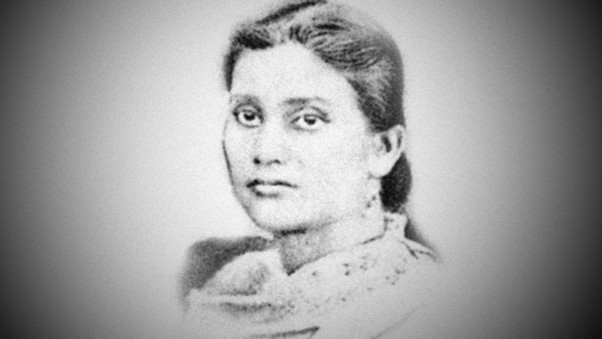
2. Dr. Kadambini Bose Ganguly (1861–1923)
The First Woman Graduate of the British Empire
Where She Began
Born in 1862 in Barishal, Bengal Presidency, into a conservative family that viewed women’s education with disdain. Kadambini’s marriage to reformer Dwarakanath Ganguly provided her with crucial support.
Degrees
- Kadambini and Chandramukhi Basu became the first women graduates in the entire British empire when they received their B.A. degrees from Calcutta University in 1883.
- In 1886, she was awarded the Graduate of Bengal Medical College (GBMC) degree from Calcutta Medical College.
- In 1893, Dr. Ganguly obtained her LRCP from the University of Edinburgh in obstetrics.
- The same year, she procured LRCS in Glasgow and GFPS from Dublin.
The Part They Couldn’t Erase
- First woman to join Calcutta Medical College
- Practiced at Lady Dufferin, Calcutta, while also growing a successful private practice
- Attended sessions of the Indian National Congress
- Freedom fighter and a staunch feminist
How She Built Her Win
When Dr. Ganguly began practicing medicine, the orthodox society responded with vengeance. Her profession required her making house calls at night, which attracted much public ire. A popular Bengali magazine published a derogatory cartoon. She sued them for libel and won, sending the editor to jail for six months. She continued to faced judgment from the elite Bengali society.
Who Remembers?
Despite being the first woman graduate of the empire, history books do not speak of Dr. Kadambini Ganguli. The vicious social attacks she faced are rarely taught. If at all, her achievements survive, while being stripped of the context of how she was thwarted all her life.
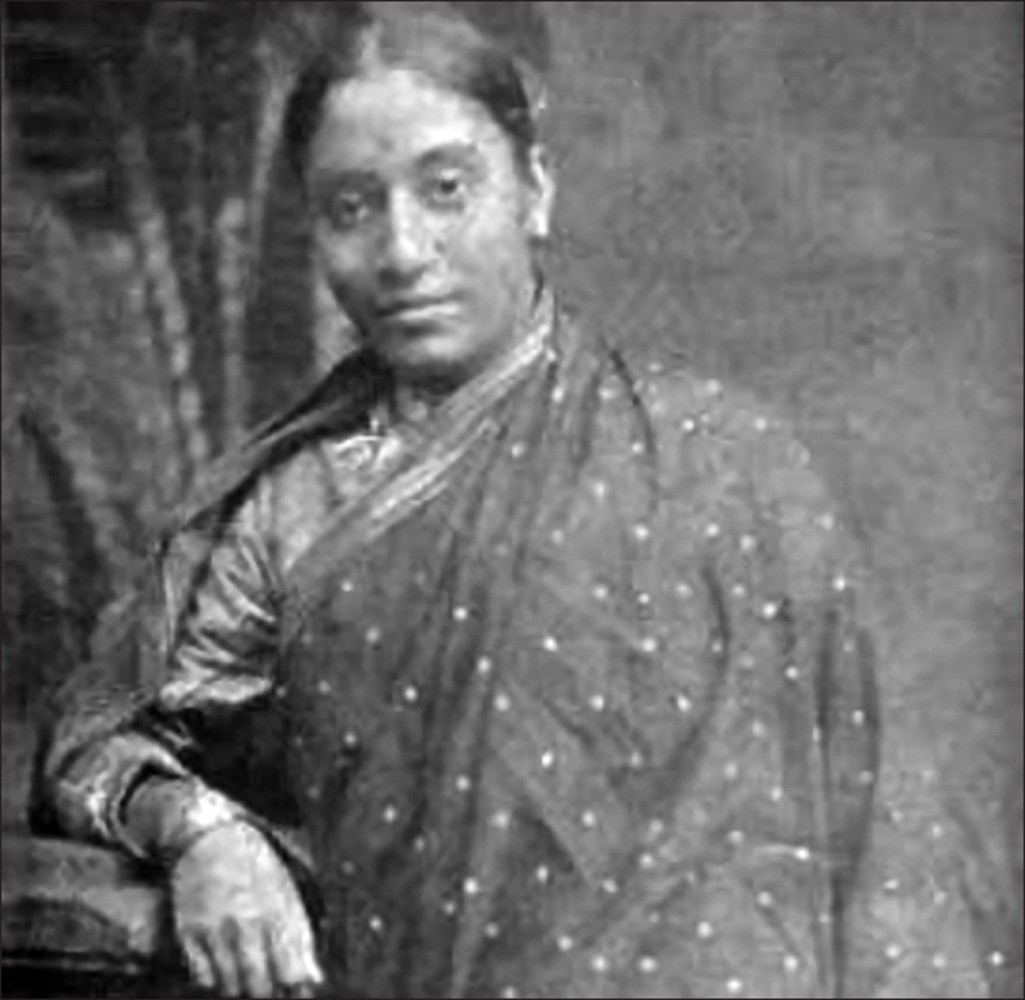
3. Dr. Rukhmabai Raut (1864–1955)
The Physician Who Refused to Be a Wife
Where She Began
Born in 1864 in Bombay (Mumbai), Rukhmabai was married off at age 11 to someone 20 years her senior. She refused to live that life, choosing to be a doctor instead.
Degrees
- MBBS from the London School of Medicine for Women in 1894
The Part They Couldn’t Erase
- Medical Officer for Women in Surat and Rajkot for 34 years
- Practiced medicine through two pandemics
- Performed surgeries and treated hundreds of women who had never before sought medical care owing to inhibitions around male doctors.
How She Built Her Win
Rukhmabai’s refusal to live with her husband led to a lawsuit for “restitution of conjugal rights,” which she lost. The court ordered her to go to her husband or face prison. She still refused. The case drew attention as it became a national scandal, debated across the British empire. The British press took up her cause, even while Indian society attacked her with personal insults. Rukhmabai still managed to travel to England and study medicine, all of it crowdfunded.
With a medical degree, Dr. Raut returned to India a celebrity. Yet, she chose an unglamorous life, working in small hospitals, far from the spotlight. Her legal defiance directly led to the Age of Consent Act of 1891. This act raised the marriage age for girls. She changed the law of the land, while still a student.
Who Remembers?
The story of Dr. Rukhmabai Raut is rarely mentioned in Indian textbooks. When she is remembered, it is often as a “child bride” rather than as a pioneering physician who shaped law and served patients for decades.
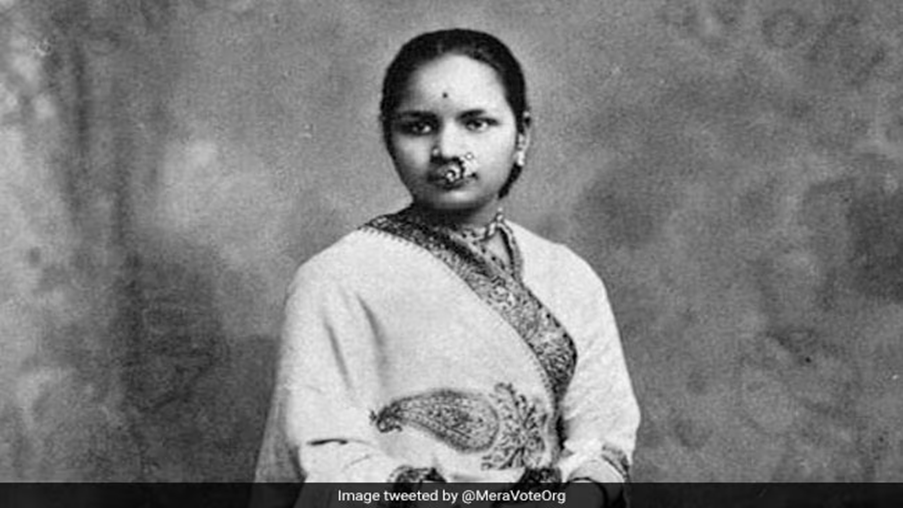
4. Dr. Anandibai Gopalrao Joshi (1865–1887)
The Brief, Brilliant Life of India’s First Woman Physician
Where She Began
Anandibai was born in 1865 in Kalyan, Maharashtra. Married at nine, she gave birth to a son when she was just 13. The death of the child without adequate medical help became the driving force of the rest of Anandibai’s life.
Degrees
- Dr. Joshi graduated from the Woman’s Medical College of Pennsylvania in March 1886, becoming the first Indian woman to earn a medical degree in Western medicine.
The Part They Couldn’t Erase
- MD thesis titled “Obstetrics in the Aryan Hindoo”
- Physician-in-Charge of the female ward at Albert Edward Hospital, Kolhapur
How She Built Her Win
When Anandibai announced her intention to study medicine in America, the orthodox society accused her of abandoning Hindu tradition to become a Christian. With support from her husband, she chased her ambition despite brutal opposition. In 1883, all of 19, Anandibai sailed alone to Philadelphia. She struggled with the cold and unfamiliar food. Her kind dean, Dr. Rachel Bodley, invited her to live in her home. There, she cooked for herself and studied. She attended classes in her traditional sarees, an initial curiosity in the anatomy class.
She graduated as valedictorian. Dr. Joshi returned to India to serve. However, within months, she succumbed to tuberculosis in February 1887, aged just 21.
Who Remembers?
For over a century, she was largely forgotten in India. Dr. Anandibai Joshi‘s grave in Poughkeepsie, New York, reads, “The First Hindu woman to enter this profession.” It was only recently that scholars and archivists, particularly the South Asian American Digital Archive, began recovering her story.
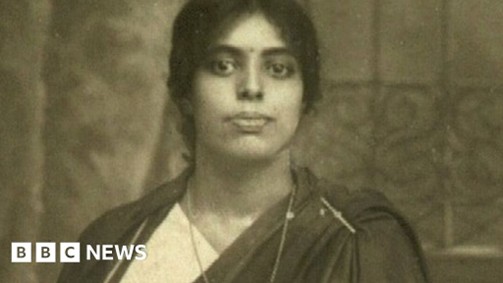
5. Dr. Janaki Ammal (1897–1984)
The Scientist Who Made Sugar Sweeter and Saved a Forest
Where She Began
Janaki was born in 1897 in Thalassery, Kerala, into a community perceived as “backward.” Born to a mother of mixed race, her family faced prejudice despite their affluence.
Degrees
- B.A. Honors in Botany from Queen Mary’s College, Madras (1921)
- M.A. from the University of Michigan (1925)
- D.Sc. from the University of Michigan (1931)
Janaki was the first Indian woman to earn a doctorate in botany overseas.
The Part They Couldn’t Erase
- First female scientist at the Royal Horticultural Society at Wisley, UK (1946–1951)
- Co-author with C.D. Darlington of The Chromosome Atlas of Cultivated Plants(1945), a foundational text in plant cytogenetics
- Fellow of the Indian Academy of Sciences (during its first year)
- Recipient of the Padma Shri (1977)
How She Built Her Win
At the Sugarcane Breeding Institute in Coimbatore (1934–1939), she created high-yielding sugarcane hybrids that changed India’s sugar industry. She faced vicious caste and gender-based discrimination. In 1939, she left India for London. In 1951, a chance meeting with PM Jawaharlal Nehru on a plane changed her life. He personally invited her to return and restructure the Botanical Survey of India. She accepted the job and returned in 1954, creating the much-needed inventory of India’s plant resources.
Later, she became an environmental activist. When the government planned to flood Kerala’s Silent Valley for a hydroelectric project, Janaki used her scientific authority to campaign against it. The project was halted. The Silent Valley rainforest stands today because of her efforts.
Who Remembers?
Despite saving a forest and revolutionizing Indian agriculture, her name is unknown to most Indians. A magnolia cultivar was named after her in the UK, “Magnolia Kobus Janaki Ammal.” However, in her home country, India, recognition came late and faint.
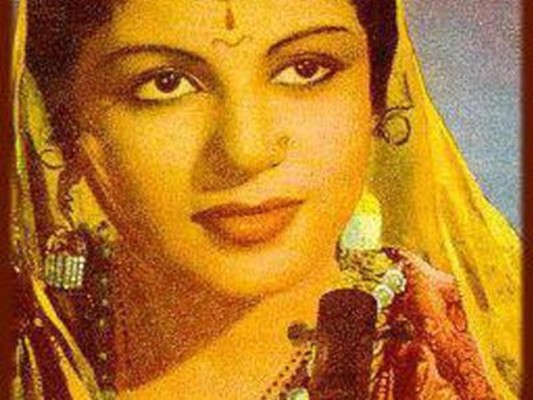
6. M. S. Subbulakshmi (1916–2004)
The Voice You Know, The Story You Don’t
Where She Began
Born on September 16, 1916, in Madurai, Subbulakshmi seems like an unlikely entry to this list. But how many of us know that Subbulakshmi came from a marginalized and stigmatized community of temple musicians and dancers, called devadasis?
Degrees
- Formal training in Carnatic music under Semmangudi Srinivasa Iyer
- Lifelong training, beyond any formal institutional routine
The Part They Couldn’t Erase
- First musician ever to receive the Bharat Ratna, India’s highest civilian award (1998)
- Ramon Magsaysay Award (1974)
- Padma Bhushan (1954) and Padma Vibhushan (1975)
- Performed at the UN General Assembly (1966)
- First Indian musician to perform at the Edinburgh International Festival
How She Built Her Win
Born into a community often excluded from “respectable” society, Subbulakshmi transcended barriers only on the strength of her talent. After her inter-caste marriage, which again drew criticism, she relentlessly pursued her craft despite health issues and personal losses. Her voice soon became synonymous with devotional music across India.
When she sang “Venkatesa Suprabhatam,“ it became so popular that it was played in thousands of homes and temples every morning. She soon tasted stardom, singing in temples all over the country, and on All India Radio.
Who Remembers?
Though widely celebrated, the social barriers and stigma that M.S. overcame, the stories of her community and the challenges of being a woman in classical music were soon forgotten. Perhaps owing to her married identity, the struggles were soon dropped. Even when her voice still plays at dawn in most south Indian homes, the story of a woman who fought to have that voice heard is barely ever a discussion point.
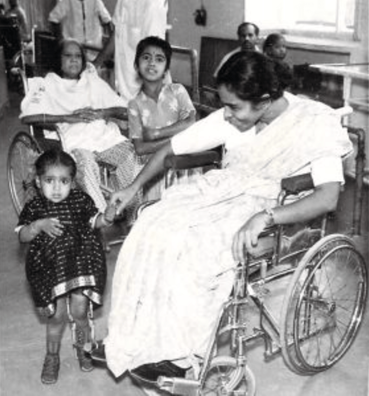
7. Dr. Mary Verghese Puthisseril (1925–1986)
The Doctor Who Rebuilt Herself and Her Patients
Where She Began
Born on May 21, 1925, in Cherai, Kerala, into an elite Christian family, Mary was among the few to get invited for an interview at Christian Medical College, Vellore.
Degrees
- MBBS from CMC, Vellore (1952)
- Fellowship in Physical Medicine & Rehabilitation from the Institute of Physical Medicine and Rehabilitation, New York (1962)
The Part They Couldn’t Erase
- In 1963, Dr. Verghese took charge of the first department of Physical Medicine and Rehabilitation at CMC Vellore.
- In 1966, she established the country’s first inpatient rehabilitation institute.
- In 1972, she received the Padma Shri.
How She Built Her Win
In 1954, soon after completing her medical training, she was in a catastrophic car crash. All her colleagues recovered. Mary did not. She sustained a complete spinal cord injury that paralyzed her waist down. The young woman, a newly qualified doctor with big dreams, could no longer walk. Most would have seen their career end.
Dr. Paul Brand, Dr. Verghese’s mentor, pointed out that she could still sit in a wheelchair and operate. Inspired, she underwent rehabilitation in Perth, Australia, and then secured a fellowship in New York with Dr. Howard Rusk, the founder of modern rehabilitative medicine.
Dr. Verghese returned to India in 1962, still in a wheelchair, to build a department from scratch. She trained herself to perform hand-reconstructive surgeries while seated. She treated patients with spinal cord and brain injuries, besides leprosy. She gave them what she had given herself: the ability to rebuild a life, well beyond her disability.
In 1966, she inaugurated the Rehabilitation Institute at Vellore, which functions to this day. She worked there until 1976.
Who Remembers?
Despite being a pioneer of rehabilitation medicine in India and a Padma Shri recipient, the name of the world’s first “wheelchair surgeon” is barely known outside medical circles. Her biography, “Take My Hands: The Remarkable Story of Dr. Mary Verghese,” was published in 1963. While most of her peers wrote her off as “crippled,” Dr. Mary Verghese continued to serve for decades until her death in 1986, aged 61.
8. Dr. Tessy Thomas (b. 1963)
“Missile Woman”: The Sobriquet That Isn’t Enough
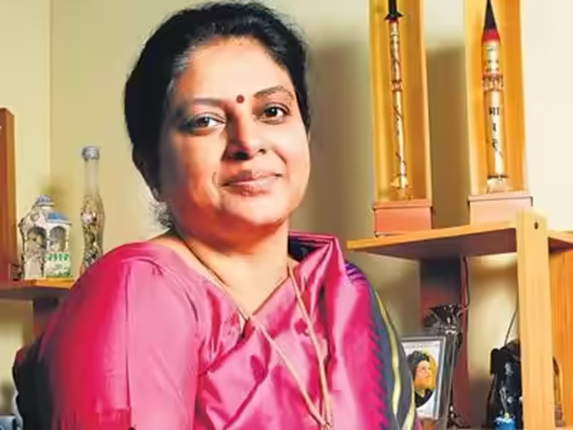
Where She Began
Born in Alappuzha, Kerala, to an IFS officer, Tessy dreamed of growing up to work at the Thumba rocket launching station, which was located near her childhood home.
Degrees
- B.E. from Thrissur Engineering College
- Master’s in Guided Missile Technology from the Institute of Armament Technology, Pune
- MBA in Operations Management
- PhD in Missile Guidance
The Part They Couldn’t Erase
- First woman to head an Indian missile project, the Agni-IV and Agni-V
- Expert in solid propellant systems and multiple targetable re-entry vehicles
- Helped Agni-V withstand temperatures of over 3,0000 C during re-entry
- Recipient of the DRDO Scientist of the Year Award (2008), Lal Bahadur Shastri National Award (2012), and multiple honorary doctorates from five universities
How She Built Her Win
Dr. Thomas joined DRDO in 1988. At every step, she was the only woman in the room. In the male-dominated defence sector, she faced skepticism—not about her ability, but about her presence. Unlike her male peers, she had to walk a tightrope between work and family. When a missile failed in July 2006, the team faced heavy criticism. For weeks after, Dr. Thomas hardly left her lab, fixing all the flaws within months.
Who Remembers?
Despite being a national asset, Dr. Thomas is not a celebrated national hero. Anand Mahindra once said: “Tessy deserves to be more famous than the biggest movie stars. A poster of hers in every Indian school will wreck stereotypes and create enormous career aspirations for girls.” Nothing of the kind ever happened. The name of Dr. Tessy Thomas is still unknown to most Indians, while her male contemporaries are celebrated as heroes.
References for Images and Facts
- https://www.britannica.com/biography/Savitribai-Phule
- https://artsandculture.google.com/story/savitribai-phule-zubaan/mAWBW6eHcTWSLg?hl=en
- https://ijcrt.org/papers/IJCRT2312212.pdf
- https://caleidoscope.in/alternative-lifestyle/savitri-bai-phule#google_vignette
- https://www.hindustantimes.com/kolkata/google-doodle-for-rukhmabai-raut-but-india-s-first-woman-doctor-kadambini-ganguly-remains-forgotten/story-FhKVY8OS4WFWY8PoQ9phBM.html
- https://global.ed.ac.uk/uncovered/1860-1900/kadambini-ganguly
https://www.thetalentedindian.com/kadambini-bose-ganguly-indias-medical-and-feminist-icon/ - https://pmc.ncbi.nlm.nih.gov/articles/PMC11289354/#REF4
- Chandra, Sudhir. “Rukhmabai: Debate Over Woman’s Right to Her Person”. Economic and Political Weekly, 2937-2947, 1996
- https://trove.nla.gov.au/newspaper/article/149538620
- https://www.thehindu.com/news/cities/chennai/When-the-Queen-of-Song-captured-the-West/article11621104.ece
- https://www.theindiaforum.in/article/life-and-art-ms-subbulakshmi
- https://www.bbc.com/audio/play/b073b5cb
- https://www.cmch-vellore.edu/wp-content/uploads/sites/14/2024/04/Change-agents-Mary-Verghese.pdf
- https://iapmr.in/old_website/faculties/details/48
- https://herstemspace.org/2024/07/02/dr-mary-verghese-the-wheelchair-surgeon/
- https://www.bbc.com/news/world-asia-india-63445015
- https://timesofindia.indiatimes.com/science/tessy-thomas/articleshow/61845721.cms
- https://www.iitk.ac.in/doaa/convocation/data/Profile_Dr._Tessi_Thomas.pdf
- https://sites.ndtv.com/women-of-worth/nominee-dr-tessy-thomas/
- https://www.jgnt.co/anandibai-joshi-first-indian-woman-doctor-medicine
- https://hindi.newsroompost.com/india/first-indian-doctor-anandibai-joshi-who-study-in-america/692522.html
- https://medium.com/@sourin.rao/heroes-anandi-gopal-joshi-the-first-female-indian-doctor-of-western-medicine-b93467e51911
- https://www.woodenstreet.com/blog/top-10-women-freedom-fighters-of-india?srsltid=AfmBOoq7NU0gtI2gR_I7Y_xgeALgvOH5fNT3fG-bbEGPoyQR3olfYHB8
Storyteller


Other posts
-


Shakti Prasad
- 13 Mar 2026
- 7 min read
-
Shakti Prasad
- 12 Mar 2026
- 20 min read
-
Manasa Srinivasan
- 06 Mar 2026
- 3 min read