

The enterprise shift from traditional search engines to generative AI platforms such as Gemini, Perplexity, and ChatGPT represents a complete overhaul of the corporate knowledge base.
We have spent decades mastering the known mechanics of Search Engine Optimization (SEO) and the familiar levers of keywords, backlinks, and site authority. As we move into the era of Answer Engine Optimization (AEO), we are entering a black-box environment. Unlike the transparent world of blue-font links, these systems synthesize proprietary data and public web information into a single, authoritative response.
For the modern enterprise, the stakes are significant:
The Death of the Footnote
When an executive requests a competitive landscape analysis, they are not looking for a list of sources. They are looking for a conclusion. If the AI’s underlying sources are biased or outdated, the strategy is flawed from the start.
The AEO Visibility Gap
In the old world, you knew why you ranked number one. In AEO, the logic behind why an AI selects one legal precedent or market statistic over another is often opaque. This makes it difficult for organizations to ensure their brand and data are represented accurately.
The Foundation of Decision-Making
For legal and strategy teams, these platforms are no longer just research assistants; they are shaping the narrative. If the synthesis is wrong, the corporate response will be wrong.
The Big Shift from Keywords to Context
Traditional search engines, Google for example, worked primarily on a library-index model. They looked for keywords and used algorithms such as PageRank to determine which websites were the most authoritative, based on how many other sites linked to it.
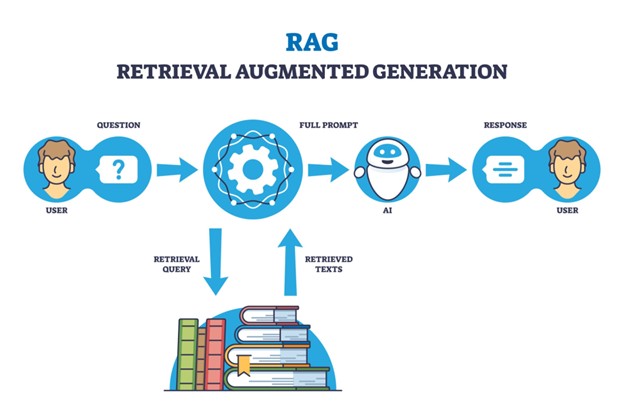
AI search engines work differently. They don’t just point you to a website; they read the internet for you and summarize the findings. This process is known as Retrieval-Augmented Generation (RAG).
The decision of what to cite happens through a multi-stage filter that prioritizes relevance, reliability, and technical accessibility.
RAG bridges static AI models with the live internet, shifting business strategy from winning the click to being the source. The shift to a RAG-based search environment changes the rules of engagement for corporate data and brand visibility:
- From Ranking to Reliability
Success is all about being citable. If AI systems cannot easily parse your whitepapers, your brand will not appear in the final summary. - The Trust Mandate
AI-driven decisions require high-authority data. Positioning your brand as the trusted source for AI synthesis is the new number one ranking. - Technical Accessibility
To be retrievable, content must move away from gated PDFs toward structured data and clear semantic headings that AI systems can ingest. - Controlled Narratives
Internally, RAG enables organizations to build private AI systems grounded in verified company data, eliminating external noise and reducing hallucinations.
The Four Pillars of Citation
How AI Chooses Its Sources
When ChatGPT or Perplexity receives a prompt, it doesn’t simply know the answer. Instead, it performs a lightning-fast search and evaluates thousands of potential sources. Here are the four primary factors that determine which ones make the cut.
1. Semantic Relevance
Traditional search worked like a librarian matching words on a cover. AI search works like a consultant who has read every page and understands your intent.
- From keywords to concepts, AI understands the context around an idea, beyond just exact words.
- The density rule is that AI prioritizes the most useful source, the one that solves the most problems with the least friction.
2. Authority and E-E-A-T
Borrowed from Google’s playbook, AI engines lean heavily on Experience, Expertise, Authoritativeness, and Trustworthiness (E-E-A-T).
For enterprise queries, AI systems are programmed to prefer primary sources. These include official white papers, government reports, well-known industry journals (such as Harvard Business Review or McKinsey), and official corporate newsrooms. If a blog post on an unknown site says the same thing as a report from a recognized industry leader, AI will almost always cite the industry leader.
3. Freshness and Recency
In the business world, a three-year-old statistic is often a useless statistic. Platforms, especially Perplexity and Gemini, prioritize real-time or live web data.
When a query involves market trends, stock prices, or recent tech releases, AI evaluates the published date metadata and introduces a recency bias to ensure that the user is not relying on outdated information.
4. Structure and Machine Readability
This is where many enterprises fall short. An AI engine is essentially a highly sophisticated reader. If your website is cluttered with popups, disorganized text, or content locked behind complex scripts, the AI’s crawler may skip it entirely
Platform Deep Dive
ChatGPT vs. Perplexity vs. Gemini
While the core logic remains similar, each platform has a slightly different personality when it comes to citations.
ChatGPT (OpenAI)
ChatGPT functions as a master researcher, prioritizing comprehensive pillar content that enables it to resolve complex prompts in a single, authoritative summary. For businesses, this means long-form, in-depth guides that cover topics holistically are far more likely to be cited than fragmented blog posts.
Behind the scenes, this process is powered by high-speed integration with the live web. ChatGPT translates natural language queries into multiple targeted search prompts and retrieves relevant information through Bing’s Web API. It then synthesizes these results with its training data to produce responses that are both current and contextually rich.
Perplexity AI
Perplexity acts as a discovery engine, prioritizing transparency and a diversity of perspectives. Unlike models that aim for a single, all-in-one guide, Perplexity often surfaces multiple source cards, favoring niche expertise and technical documentation. For businesses, this means that being the definitive authority in a specific domain is more valuable than having a broad appeal. If your technical data is the most precise, Perplexity’s discovery model is designed to find and credit it.
Operationally, Perplexity delivers real-time answers by acting as a sophisticated layer on top of Google or Bing. It accepts a user query, sends it to a traditional search API, and programmatically retrieves and analyzes the top results to synthesize a conversational response. While it also runs its own crawler, PerplexityBot, to build a long-term dataset, its real-time outputs still rely heavily on traditional search indexes.
To perform well in this environment, content must be structured for easy extraction. This means optimizing for snippet readiness, presenting clear, evidence-backed answers that AI systems can easily identify and cite. Success is less about keyword rankings and more about being the clearest, most authoritative source available.
Google Gemini
Gemini is the reasoning layer of the Google ecosystem, powered by native integration with Google Search infrastructure. Unlike other AI systems, it uses grounding to perform real-time query fan-outs, issuing multiple sub-searches to verify facts and build high-accuracy responses from the world’s most sophisticated index.
For businesses, Gemini rewards brands that are established as clear entities within the Google Knowledge Graph. Because it is natively multimodal, it does not rely only on text. It also interprets YouTube content, visual data, and structured inputs to validate E-E-A-T.
If your brand already has strong organic visibility, you have a significant advantage. Success in this environment depends on being the most explainable, structured, and trusted authority in your category.
Why This Matters for the Modern Enterprise
For decades, the primary goal of digital marketing was “clicks” or getting users to land on your website. In the era of AI search, the new goal is “citations.”If an AI engine summarizes your company’s unique methodology but fails to cite it, you lose the opportunity to build brand authority. Conversely, if AI cites your competitor as the industry standard, your brand may be effectively removed from the user’s consideration set.
This is why Generative Engine Optimization (GEO) is emerging as a critical strategy. Beyond being discoverable, it’s about being trusted by AI systems. Many organizations are turning to experts such as Toss the Coin to audit their digital assets, so that their white papers, case studies, and thought leadership are structured for AI visibility.
The Red Flags: What Makes AI Ignore Your Content?
Just as important as knowing what AI cites is understanding what it rejects! Content is often ignored when it falls into these traps:
- Gated Content
If your most valuable insights sit behind a “fill out this form to download” gate, AI crawlers typically cannot access them. - Lack of Attribution
If an article makes bold claims without citing its own sources, AI systems may treat it as low authority. - Vague Language
AI systems prefer concrete information.
“World-class solutions for many industries” is vague.
“Our platform reduced operational costs by 22% for Tier-1 automotive suppliers” is specific and cite-worthy. - Slow Load Times and Poor Mobile Optimization
AI search systems rely on the same web crawling infrastructure as traditional search engines. Poor technical performance can reduce visibility. - The JavaScript Factor
To ensure your most valuable data is indexed for AI reasoning, your JavaScript must be optimized so crawlers can easily access and extract content hidden behind dynamic elements.
The Ethical Layer
There is also a legal and ethical reason why AI systems increasingly rely on citations. Early GenAI systems struggled with “hallucinations.” Those are instances where the AI generated incorrect or fabricated information.
By grounding responses in real-world sources through processes such as RAG, developers have significantly improved accuracy.
For enterprises, this acts as a safety mechanism. It allows users to verify information by reviewing the cited source. This human-in-the-loop verification is particularly important in high-stakes sectors such as finance, healthcare, and law.
How Should Organizations Adapt to the What AI Decides What to Cite
Here is a simple roadmap.
1. Focus on Information Density
Avoid producing filler content. Every piece of content should contain a unique data point, insight, or perspective. AI engines look for concentrated value. A short article with original insights may be cited more often than a long article filled with generic content.
2. Optimize for Natural Language Questions
Think about the actual questions your customers ask AI systems.
Instead of targeting a keyword such as “Supply Chain Software,” target questions such as
“How can mid-sized manufacturers reduce carbon footprints in their supply chains?”
Direct answers make it easier for AI systems to extract and cite your content.
3. Use Structured Data (Schema Markup)
Structured data tells AI systems what different parts of your content represent. You can use Schema markup to label content as FAQs, articles, reviews, or products, making it easier for AI systems to interpret and cite those.
4. Build a Citation Moat
The more reputable websites cite your content, the more likely AI systems are to cite you as well. This evolves the traditional backlink strategy into a credibility network. Being referenced by trusted industry hubs significantly improves your cite-ability.
The Future: From Search to Action
We are moving toward a world where AI systems don’t just search, but act.
Imagine an AI assistant that doesn’t simply recommend the best CRM platforms but automatically contacts the top three cited providers to schedule demos.
In that world, being a cited source becomes more than a marketing advantage. It becomes part of the automated decision pipeline. If AI doesn’t cite you, your business may never even enter the competitive process.
Conclusion
The “black box” of AI decision-making is less mysterious than it appears. AI search engines are designed to mimic an efficient, methodical researcher. They prioritize clarity, authority, accuracy, and technical accessibility.
For enterprises, the message is clear: the era of gaming search rankings with keywords is fading. The future belongs to organizations that earn citations through genuine expertise and well-structured digital content.
By aligning your content strategy with how AI platforms, such as ChatGPT, Perplexity, and Gemini, evaluate and surface information, you ensure that when the world asks for an expert in your field, AI points directly to you.
Storyteller