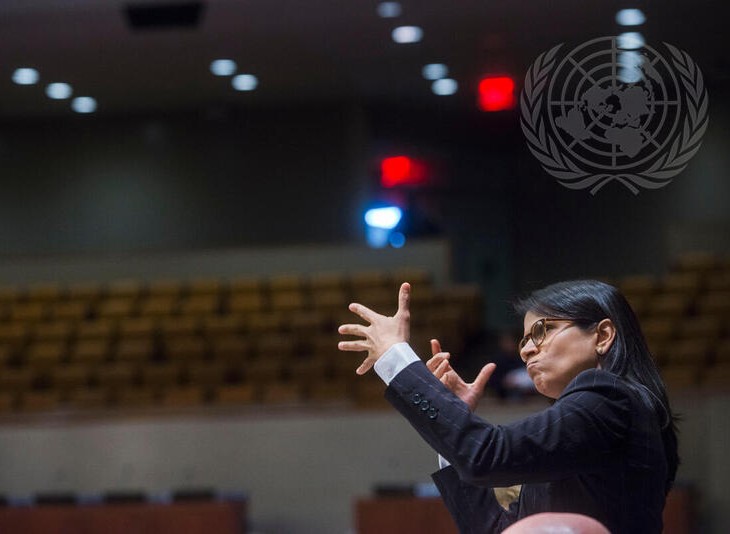
Every year, December 3rd is set aside as the International Day of Persons with Disabilities. The UN theme for 2025 was” Fostering disability-inclusive societies for advancing social progress.”
Yes, I am aware this comes in well past the day and month of observance. However, I believe the principles the day champions are not confined to a date. True inclusion is a daily practice, and the day is but a reminder, not a deadline, for a cause we must uphold round the year.
So last month, as we at TTC made a few social media posts marking the day, our team was faced with a choice: To pick between a well-meaning euphemism and a term of respect. Should it be “Differently Abled?” I was proud to note that Ashitha Bhatt and Malavika Mahendranath held firm to the correct terminology: “Persons with Disabilities.”
This moment was not a pause in work… Nor was this about editing choices. It was a vital reminder that beyond describing our world, language reflects our thoughts and actively shapes it. This is also why editing is way beyond proofing, fixing punctuations, and resetting syntax. The words we choose as professionals either reinforce dignity or perpetuate outdated and often harmful stereotypes.
We at TTC, invest to seek and learn equitable language. For us, it is not about political correctness. It’s a non-negotiable standard woven into our personal and professional ethics and organizational values.
Did you know that 1.3 billion people, that is 16% of humanity, live with a disability? How we speak about the community is a direct reflection of who we are. It’s a business imperative for authentic engagement and a moral commitment to the society we want to help build.
So, how do we move from intention to informed practice? This is where many worry about making mistakes. Here are six clear points to help everyone get inclusive language right:
Person-First or Identity-First Language?
This is 101. Globally, there are two standards in use:
- The core principle of Person-First language is to put the person before the condition, such as “a person with deafness” or “an employee with bipolar disorder.” This standard separates the person from the disability. It argues that disability is just one attribute, not the defining characteristic.
- However, Identity-First language is the preferred standard for some communities. This acknowledges that the disability is a core part of personal and community identity. Therefore, erasing it linguistically can feel as if an important part of the self is being erased. This is especially important for people with invisible disabilities such as Deafness and Autism. Here, the preferred terms are “Deaf individual” or “Autistic person”.
I know this can be confusing. When unsure, it is best to ask or follow the lead of reputable advocacy organizations.
Avoid Euphemisms Entirely.
Terms such as “differently abled,” “person with special needs,” “handicapped”, or “handicapable“. Though often used with good intentions, they are widely regarded as condescending. They soften reality in a way that can dismiss the lived experiences and real barriers people face. Direct, accurate language is more respectful. Say “wheelchair user,” not “wheelchair-bound.” Say “uses a speech synthesizer,” not “is verbally challenged.”
Focus on Inclusion. Do Not Glorify. Do NOT Aim for Inspiration.
Avoid framing disability as a tragedy to be pitied or a hurdle to be heroically overcome. Phrases such as “suffers from” or “inspirational fighter” reduce individuals to stereotypes. Instead, describe situations factually and neutrally. Emphasize access and equity: “needs captioning,” “requires documents in Braille,” or “uses a ramp for access.” People with disabilities do not exist to inspire. They have the same rights to equitable participation as anyone else.
Be Specific and Accurate.
When relevant, use precise terminology. Refer to “a person with schizophrenia” or “a person with limited mobility.” Avoid broad, dehumanizing generalizations such as “the disabled” or “the mentally ill,” which ignore individuality and diversity within the community.
When Unsure, Read Up… Or Ask!
This is the golden rule. If you are uncertain about the appropriate language, mirror the terms used by major disability advocacy groups. Look up authoritative guides from the UN’s Language Guidelines, the National Center on Disability and Journalism Style Guide, or APA’s bias-free language guidelines. Most importantly, when appropriate and possible, ask the individuals themselves. Most people will appreciate your sincere effort to get it right. Listen and adapt. If someone corrects you, thank them and use their preferred terminology.
Follow Authoritative References.
Make the effort. Do not place the onus of your education on a disabled person. They do not owe you a teachable moment. Here are a few globally acceptable inclusive language guidelines:
Today, the commitment to use the right language is the cornerstone of organizations that signal genuine intent and respect. The right words build bridges and inspire trust. When paired with meaningful policy, they open doors to the inclusive future we dream of. True inclusion works when our language reflects not just awareness, but active respect.
Banner image courtesy: UN Photos
Banner image caption
Maleni Chaitoo, representative of the International Disability Alliance/International Disability and Development Consortium (IDA/IDDC), addresses a meeting using sign language during the special event in observance of the International Day of Persons with Disabilities on 3 December 2015.
Source
Storyteller