

Other Genres
Other Tags
- #AIEvolution
- #AIMarketing
- #B2BManufacturing
- #B2BMarketing
- #B2BStrategy
- #BuyerJourney
- #BuyerPsychology
- #CinematicThinkinginBusiness
- #CMO
- #CMOInsights
- #CognitiveMarketing
- #ComfortZone
- #ContentthatConnects
- #CreativeBlog
- #CreativeChaos
- #Creativeleadership
- #CreativitybuildsConsistency
- #DigitalTransformation
- #EmpathyinLeadership
- #Empowerment
- #EnterpriseSales
- #EthicsinCommunication
- #FOEvsFOMO
- #GlobalMarketing
- #Gratitude
- #GrowthMindset
- #GrowthStrategy
- #HerStory
- #HiddenFigures
- #ImpactfulStories
- #InclusiveLanguage
- #LeadershipStorytelling
- #LifeLessons
- #MarketingForFounders
- #MarketingLeadership
- #MarketingStrategy
- #MarktetingConcepts
- #MindsetShift
- #ModernWorkplaceDynamics
- #MomentuminCreativity
- #MultigenerationalLeadership
- #OrganisationalCulture
- #Organisationalmetaphors
- #Perfectionism
- #Personalgrowth
- #PremiumPositioning
- #Productivity&AI
- #ProfessionalServices
- #Reflections
- #Relatablewriting
- #SelfBelief
- #STEMRoleModels
- #StoriesThatStay
- #StoryBehindStorytellers
- #Storytellers
- #StorytellingforTechnologists
- #StorytellinginMarketing
- #TechnologyTrends
- #ValuebasedPricing
- #VerticalAuthority
- #WomeninHistory
- #WomenInSTEM
- #WorkLife
- #WorkplaceEquity
- #WorkStories
- AI
- Branding
- Culture
- Design
- Elastic Marketing
- Employee Experience
- Employer Branding
- Founder-led Companies
- Gender Bias
- HubandSpoke
- IPO
- LeanMarketing
- Marketing
- Partner Marketing
- soulful stories
- Storytelling
- TosstheCoin

We are having fun with AI. Subscribe here to get a glimpse
Subscribe nowWhy horizontal capability is quietly costing mid-tier partners the deals they deserve
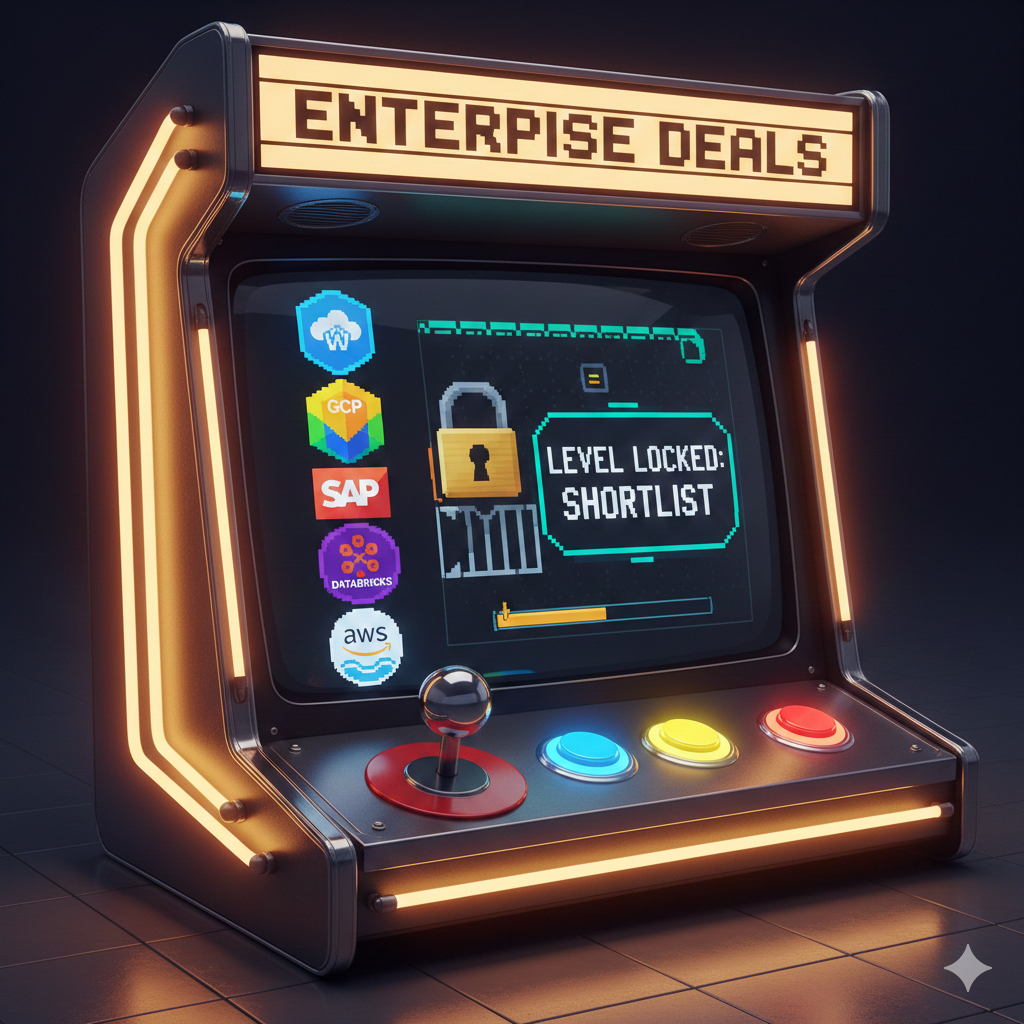
I’ve watched this pattern play out dozens of times across my engagement working with B2B tech services companies. A mid-tier partner achieves a significant milestone like AWS Advanced, SAP Gold, Databricks Select, Workday Services Partner. The organization celebrates, rightly so, and their sales deck gets updated. And for a brief, satisfying moment, it feels like you have moved up a gear.
Then, three to six months later, something uncomfortable becomes obvious.
Nothing has materially changed. The pipeline looks the same and enterprise inbound hasn’t surged. You are still competing against the same large SIs and are still being evaluated as ‘one of several capable firms.’
In two decades of working with services organizations at exactly this inflection point, I have come to recognize this moment. This is not a sales problem or a delivery problem… it’s actually a positioning problem—specifically, the quiet and costly trap of horizontal capability.
Why do large SIs get all the contracts?
Here is the uncomfortable truth that most mid-tier partners don’t want to confront: large SIs have built enough brand equity that they can afford to be horizontal and broad in their capability messaging. When Accenture presents a broad capability slide spanning cloud transformation, data engineering, ERP implementation, and AI enablement across every major industry vertical, buyers assume depth. The brand fills in the gaps and the scale signals competence. Add to that Analyst endorsements which reinforce perception.
When a £70–100M partner presents the same slide, it reads as generic.
“The same words carry completely different weight depending on who says them.”
This is the illusion and if you have structured your go-to-market positioning horizontally with broad services across multiple industries, you have unknowingly stepped into a competitive model designed for firms ten times your size. You are fighting on their terms, on their battlefield, with a fraction of their brand equity.
I have seen talented, genuinely expert organizations lose shortlist positions to larger competitors not because they were less capable, but because they never gave enterprise buyers a compelling reason to choose them specifically.
So, are you saying horizontal positioning is costing me my shortlists?
Let me be direct about how enterprise buyers actually evaluate partners, because it’s quite different from how most mid-tier firms present themselves.
A manufacturing enterprise planning an S/4HANA migration isn’t looking for ‘ERP implementation services.’ They’re evaluating providers against a very specific frame: S/4HANA migration for discrete manufacturing with global supply chain complexity. A healthcare payer modernizing their analytics capability is not searching for a ‘cloud transformation partner.’ They want someone who has done AWS-based data modernization for healthcare payer claims systems before.
Enterprise buyers think in combinations: industry plus workload plus risk profile plus desired outcome. They are, fundamentally, risk-averse. They need signals that say ‘this firm has done this exact transformation in organisations like ours.’
“When your positioning is horizontal, you force the buyer to do the mental work of connecting your generic capabilities to their very specific situation. That cognitive burden works against you.”
Unlike large SIs who can survive that ambiguity, mid-tier firms cannot risk it. When you say ‘we provide SAP S/4HANA implementation services’ and a global SI says the same thing, the buyer defaults to the name with greater perceived safety. And this happens every time.
Horizontal messaging feels safe internally because it signals scale, versatility, and a wide addressable market. Also, sometimes mid-tiers fall in the trap of let’s recognize our technology delivery heads and position horizontally. But externally, it dilutes authority because it showcases your capability but not your specialization. In a crowded partner ecosystem, being ‘generally capable’ is not a differentiator. It’s a commodity position.
How do you know that narrowing my positioning wont eat away the business I am getting today?
When I raise vertical focus with leadership teams, the reaction is almost always the same: ‘If we narrow, we’ll lose opportunities.’
I understand that instinct. After years of building a broad delivery capability, it feels counterintuitive and even reckless to consciously constrain how you present to market. But here is what I have consistently observed over two decades: organizations aren’t losing opportunity by staying broad. They are losing relevance and it’s the relevance that will earn them the shortlist.
Breadth, in the minds of leadership, feels strategic and signals scale and versatility. But from a buyer’s perspective breadth communicates availability.
Consider the language shift:
‘We implement SAP across industries’ tells a buyer you do many things. ‘We specialize in S/4HANA migration for discrete manufacturing enterprises under £1.5B revenue’ tells a buyer you understand companies like theirs. One invites comparison with every other firm on the longlist. The other creates genuine preference.
“You are not reducing your market by sharpening your positioning. You’re increasing your memorability and only memorability is what gets you on the shortlist, even before the first conversation happens.”
How might I build vertical authority?
I want to be practical here, because this is not just a philosophical argument about brand. Vertical authority positioning built around the intersection of industry, workload, and outcome improves almost every lever in your commercial model, and I have seen this validated consistently across the firms I have worked with.
When you sharpen your positioning, your messaging becomes cleaner and faster to produce. Your case studies align directly to buyer context rather than requiring translation. Your thought leadership becomes genuinely differentiated rather than another take on industry-generic themes. Your paid campaigns become more efficient because you’re targeting a defined audience rather than hoping broad messaging resonates with someone.
Sales conversations accelerate because you arrive in the room already contextually credible. You are not spending the first forty minutes of an enterprise meeting establishing relevance, instead you are discussing specifics.
Most significantly, vertical positioning changes the competitive frame entirely. Instead of going head-to-head with large SIs on scale, you are now competing on depth of industry knowledge, precision of experience, and the agility that comes from not being a £10 billion bureaucracy. That is a more winnable frame.
And honestly, for mid-tier partners, it’s often the only sustainable one.
Your partner tier like your AWS Advanced badge, your SAP Gold status, your Workday certification, etc, proves you can deliver. It’s a necessary signal of credibility and genuine investment. But it’s table stakes, not differentiation.
What enterprise buyers are ultimately seeking isn’t proof that you’re capable in a generic sense. They want confidence that you specifically understand their world, their industry’s regulatory constraints, their workload’s technical nuances, their organization’s risk tolerance, their definition of a successful outcome.
Vertical authority provides that confidence in a way that horizontal positioning structurally cannot. It shifts you from competing on eligibility to competing on preference. And in enterprise consulting, preference determines the shortlist.
“The firms I have seen break out of the mid-tier trap aren’t necessarily louder or better resourced. They’re sharper. They made a deliberate choice about where they would be known and then committed to being genuinely known there.”
If your partner strategy currently stops at certification and a horizontal services menu, you are working hard to remain comparable. The shift to vertical authority is the work that makes you preferable.
In a crowded ecosystem, precision beats size. It always has. The question is whether your go-to-market reflects that reality or whether you are still competing on their terms.
Storyteller



Other posts
-



Malavika Mahendranath
- 20 Feb 2026
- 3 min read
-


Anjana Selvaraj
- 20 Feb 2026
- 2 min read
-


Vandana Viswanath
- 20 Feb 2026
- 5 min read