

Other Genres
Other Tags
- #AEO
- #AIEvolution
- #AIInMarketing
- #AIMarketing
- #AISearch
- #AITransformation
- #AnswerEngineOptimization
- #ArtAndEmotion
- #ArtAndLife
- #B2BManufacturing
- #B2BMarketing
- #B2BStrategy
- #BuyerJourney
- #BuyerPsychology
- #ChangingNorms
- #CinematicThinkinginBusiness
- #CMO
- #CMOInsights
- #CognitiveMarketing
- #ComfortZone
- #CompetitiveStrategy
- #ContentthatConnects
- #CreativeBlog
- #CreativeChaos
- #CreativeExpression
- #CreativeJourney
- #Creativeleadership
- #CreativitybuildsConsistency
- #DigitalTransformation
- #EmpathyinLeadership
- #Empowerment
- #EnterpriseSales
- #EthicsinCommunication
- #EverydayObservations
- #FOEvsFOMO
- #GEO
- #GlobalMarketing
- #Gratitude
- #GrowthMindset
- #GrowthStrategy
- #HerStory
- #HiddenFigures
- #ImpactfulStories
- #InclusiveLanguage
- #LeadershipStorytelling
- #LifeLessons
- #LLMSearch
- #MarketingForFounders
- #MarketingLeadership
- #MarketingStrategy
- #MarketingThinking
- #MarktetingConcepts
- #MindsetShift
- #ModernWorkplaceDynamics
- #MomentuminCreativity
- #MultigenerationalLeadership
- #OrganisationalCulture
- #Organisationalmetaphors
- #Perfectionism
- #Personalgrowth
- #PersonalReflection
- #PerspectiveShift
- #PowerOfArt
- #PremiumPositioning
- #Productivity&AI
- #ProfessionalServices
- #Reflections
- #Relatablewriting
- #SearchMarketing
- #SelfBelief
- #SEO
- #SocialConditioning
- #STEMRoleModels
- #StoriesThatStay
- #StoryBehindStorytellers
- #Storytellers
- #StorytellingforTechnologists
- #StorytellinginMarketing
- #TechnologyTrends
- #ValuebasedPricing
- #VerticalAuthority
- #WomeninHistory
- #WomenInSTEM
- #WorkLife
- #WorkplaceEquity
- #WorkStories
- AI
- Branding
- Culture
- Design
- Elastic Marketing
- Employee Experience
- Employer Branding
- Founder-led Companies
- Gender Bias
- HubandSpoke
- IPO
- LeanMarketing
- Marketing
- Partner Marketing
- soulful stories
- Storytelling
- TosstheCoin

We are having fun with AI. Subscribe here to get a glimpse
Subscribe nowAn FAQ-Style Breakdown
My learning, research, and observations says:
Content creation is one thing. But
content conversion is a different game altogether.
When I started exploring this topic, I was surprised by how many brands (even the ones posting regularly) struggle to turn content into actual business impact. Through research, conversations with people who work deeply in this space, and my own attempts to understand how content fuels growth, I realized one thing:
Most content fail not because it is bad but because it is not built for the buyer’s journey.
So, I decided to break down the entire learning process in a simple Q&A format, the way I personally made sense of it.
Q1. Why is content not converting even when it looks ‘good’?
‘Good’ content is often created from the brand’s perspective: polished, well-written, aesthetic.
But conversion does not happen when the content looks good. It happens when content solves.
Here’s what I uncovered:
- Most content talks at people, not to them.
- It shares expertise, but not clarity.
- It educates but does not connect to buying intent.
- It grabs attention but does not move the reader closer to a decision.
High-growth companies have figured out that content must do two things at once:
- Build trust
- Remove friction
Everything else is secondary.
Q2. What is the biggest misconception among small-scale founders about content?
The most common assumption is:
“If we post consistently, results will follow.”
But consistency alone does not create conversions. It only creates visibility.
What’s missing is strategy; content linked to the exact questions, doubts and motivations of a potential buyer.
Small teams usually create content when time permits. High-growth companies create content that aligns to a clear pathway:
Problem → Solution → Proof → Action
This simple sequence creates a meaningful impact.
Q3. What exactly is “conversion-focused content”?
After reading, listening, and comparing patterns, I built a simple definition:
Conversion-focused content is anything that helps your audience understand, trust, and choose your solution, naturally.
It usually has three components:
- Clarity
What do you do? Who is it for? What problem does it solve?
If people must “decode” your content, they will not buy.
- Proof
This can be:
- Screenshots
- Testimonials
- Comparisons
- Before or after outcomes
- A narrative showing how you solved a real problem
Proof turns claim into credibility.
- Relevance
Your content must meet your audience at their stage:
- Some are only aware of the problem.
- Some are looking for options.
- Some need a final nudge to pick you.
Most brands push product content to people who are not even convinced about the problem yet and that’s where conversion dies. Because of their intent behind the content.
Here is what they do differently:
- They use content as sales assistants, not as decoration pieces.
Every post has a job: clarify, guide, prove, or nudge.
- They obsess over objections.
Their content answers doubt before the customer voices them.
- They design content to shorten the decision-making process.
…Not to entertain, not to sound smart but simply to remove friction.
- They repurpose smartly.
Different channels pave the way for different audience mindsets.
- They value meaningful engagement over vanity metrics.
A post that triggers a conversation with a potential buyer is worth more than a reel with 50k views.
Q4. How much does buyer intent matter in conversion?
A lot more than we think.
Most audiences are not ready to buy. They are just figuring out their problem. So, when a brand jumps straight into “here’s why we’re the best,” it feels mismatched.
High-growth companies match content to intent stages:
| Buyer Stage | What They Need | What Type of Content Works |
| Problem-Aware | “Why is this happening?” | Myths, mistakes, reasons, frustrations |
| Solution-Aware | “What are my options?” | Comparisons, approaches, frameworks |
| Product-Aware | “Is this right for me?” | Case studies, demos, proof, pricing logic |
A simple shift, but it changes everything.
Q5. If founders have limited time, what should they focus on first?
I found that Founder POV content is one of the strongest trust builders.
Founders don’t have to become content creators. But sharing their thinking in bite-sized, useful, experience-driven ways immediately builds credibility.
Here is the priority list I would recommend:
Priority 1: High-Conversion Content
- Founder or expert insights
- Clear explanation carousels
- FAQs turned into posts
- Real outcomes or micro case-studies
Priority 2: Trust-Builders
- Behind-the-scenes
- Process breakdowns
- Decision-making logic
- “We used to think X, now we know Y” posts
Priority 3: Supporting Content
- Light trends
- Motivational bits
- Culture stories
Not everything has to sell, but the best content never forgets the buyer.
Q6. What is one immediate fix that boosts conversion?
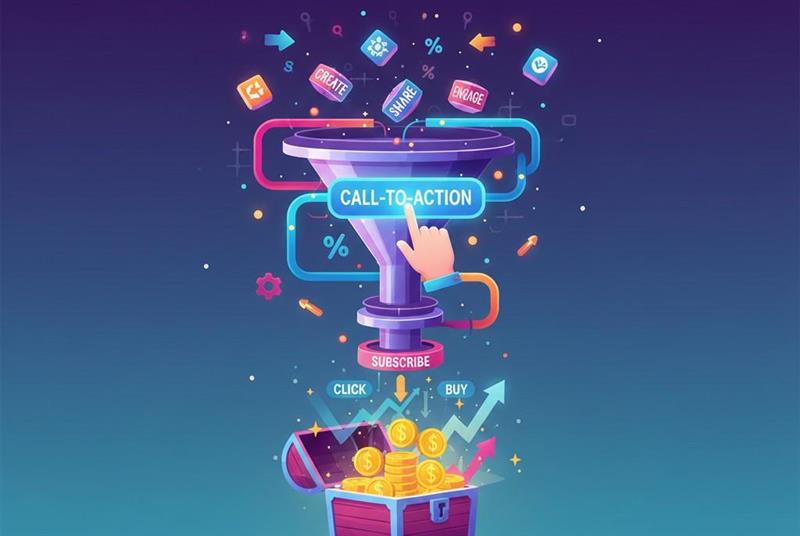
Make sure your content pathway leads somewhere.
A lot of companies create good content but then, here are the pitfalls:
- No clear service page
- No crisp offer
- No call to action
- No obvious “what next?”
It’s like giving someone directions but not the destination.
High-growth companies must ensure that the moment someone gets interested, the next step is simple, obvious, and low-friction.
Q7. What is the biggest takeaway from high-growth companies that small CEOs can adopt?
The content is not about volume; it is about intent.
You do not need:
- 20 posts a month
- Fancy production
- Every trending audio
You need content that helps your buyer confidently move from:
“I do not fully understand this…”
to
“This makes sense, I think this could help me.”
And that only happens when your content becomes a system and not a random act of posting.
Final Thought
You do not have to be a content expert to create high-conversion content.
You just need to understand the simple logic behind how people make decisions.
High-growth companies do not create more content. They create content that does more.
Once you start creating content with intention, clarity, and proof, conversion becomes a natural by-product.
Storyteller



Other posts
-



Shakti Prasad
- 13 Mar 2026
- 7 min read
-
Shakti Prasad
- 12 Mar 2026
- 20 min read
-


Manasa Srinivasan
- 06 Mar 2026
- 3 min read