

Other Genres
Other Tags
- #AIEvolution
- #AIInMarketing
- #AIMarketing
- #AITransformation
- #ArtAndEmotion
- #ArtAndLife
- #B2BManufacturing
- #B2BMarketing
- #B2BStrategy
- #BuyerJourney
- #BuyerPsychology
- #ChangingNorms
- #CinematicThinkinginBusiness
- #CMO
- #CMOInsights
- #CognitiveMarketing
- #ComfortZone
- #CompetitiveStrategy
- #ContentthatConnects
- #CreativeBlog
- #CreativeChaos
- #CreativeExpression
- #CreativeJourney
- #Creativeleadership
- #CreativitybuildsConsistency
- #DigitalTransformation
- #EmpathyinLeadership
- #Empowerment
- #EnterpriseSales
- #EthicsinCommunication
- #EverydayObservations
- #FOEvsFOMO
- #GlobalMarketing
- #Gratitude
- #GrowthMindset
- #GrowthStrategy
- #HerStory
- #HiddenFigures
- #ImpactfulStories
- #InclusiveLanguage
- #LeadershipStorytelling
- #LifeLessons
- #MarketingForFounders
- #MarketingLeadership
- #MarketingStrategy
- #MarketingThinking
- #MarktetingConcepts
- #MindsetShift
- #ModernWorkplaceDynamics
- #MomentuminCreativity
- #MultigenerationalLeadership
- #OrganisationalCulture
- #Organisationalmetaphors
- #Perfectionism
- #Personalgrowth
- #PersonalReflection
- #PerspectiveShift
- #PowerOfArt
- #PremiumPositioning
- #Productivity&AI
- #ProfessionalServices
- #Reflections
- #Relatablewriting
- #SelfBelief
- #SocialConditioning
- #STEMRoleModels
- #StoriesThatStay
- #StoryBehindStorytellers
- #Storytellers
- #StorytellingforTechnologists
- #StorytellinginMarketing
- #TechnologyTrends
- #ValuebasedPricing
- #VerticalAuthority
- #WomeninHistory
- #WomenInSTEM
- #WorkLife
- #WorkplaceEquity
- #WorkStories
- AI
- Branding
- Culture
- Design
- Elastic Marketing
- Employee Experience
- Employer Branding
- Founder-led Companies
- Gender Bias
- HubandSpoke
- IPO
- LeanMarketing
- Marketing
- Partner Marketing
- soulful stories
- Storytelling
- TosstheCoin

We are having fun with AI. Subscribe here to get a glimpse
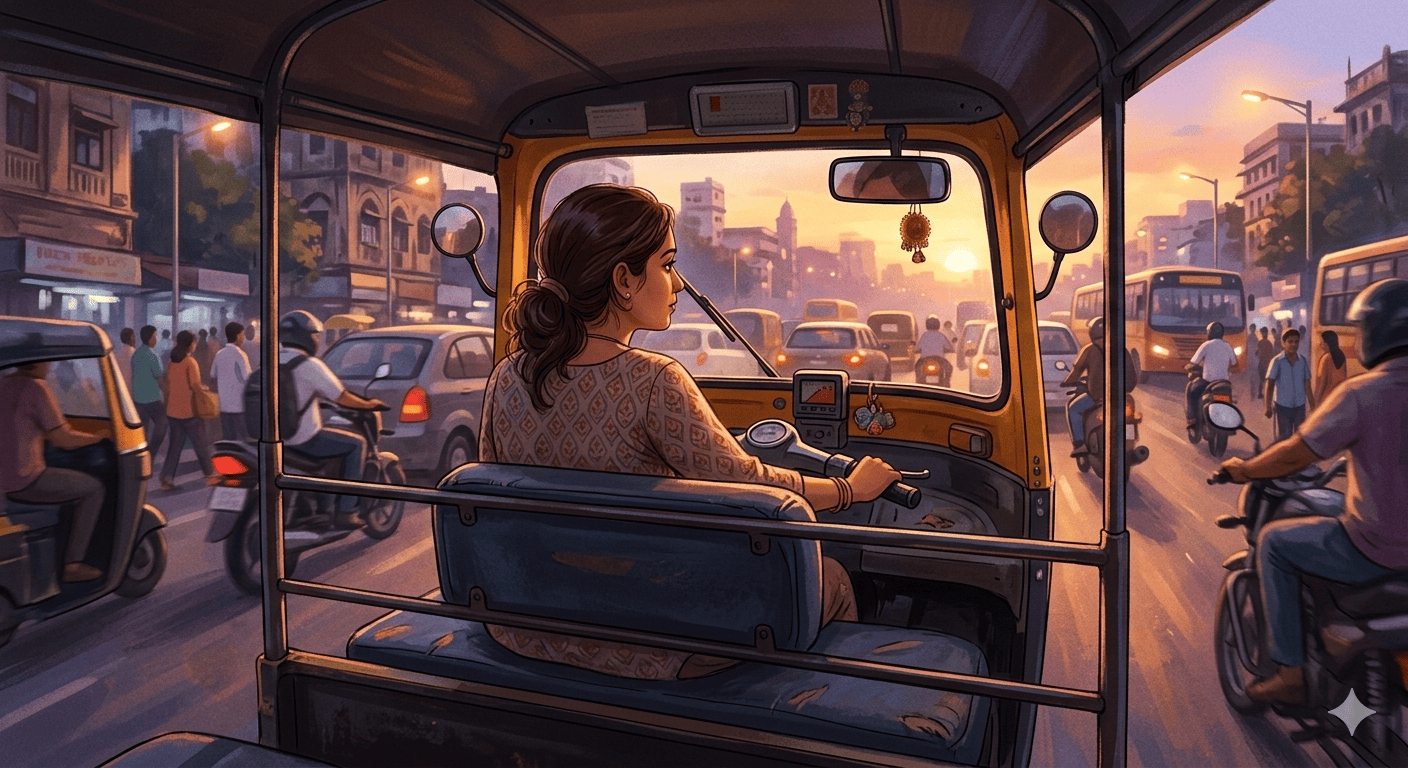
Subscribe nowThis evening, I booked an auto for my ride home from work, as I have done countless times before. It was routine, almost automatic. When the driver’s details appeared, I glanced at the name and paused for a brief second.
It was a woman’s name.
The pause was not disbelief or doubt. It was simply surprise, subtle but noticeable. In all my years of commuting, I had seen women auto drivers from afar, but I had never taken a ride with one. That small realization stayed with me.
When she arrived, she greeted me with a calm, radiant smile. It was not exaggerated, just steady and warm. There was something reassuring about it. We began the ride, and for the next fifty minutes, she navigated traffic with care. She slowed gently at speed breakers, avoided abrupt swerves, and drove with attentiveness that made the ride feel smooth.
I found myself relaxed, peaceful, and safe.
As I watched the road ahead from the back seat, another thought surfaced. I drive a car and ride a bike. I know the feeling of being behind the wheel and catching that second glance from strangers, the quick double-take that says, “Oh, a woman driver.”
Sometimes it is just surprise. But sometimes it carries something else.
I have felt the unspoken doubt at traffic signals. The unsolicited instructions. The assumption that I might be slower, less confident, or less capable. I have heard the jokes, “women drivers,” said with a smirk. Not always cruel, but rarely neutral.
The bias exists in throwaway comments, exaggerated stories, and everyday language. It is subtle, but it is real. And I have driven through it anyway.
So why was I surprised today? That question lingered.
It was not that I believed she could not drive. I know that narrative too well to subscribe to it. I have handled traffic, tight turns, impatient honks, and long highways just like anyone else. Competence does not come with a gender.
Perhaps my pause came from repetition, but also conditioning. Years of seeing men dominate that space. Years of jokes normalizing the idea that driving belongs more naturally to them.
When something breaks a socially reinforced pattern, the mind registers it. Not always as rejection, but as disruption. And disruption creates awareness.
For years, most of my auto rides have been with male drivers. That pattern became normal. When something steps outside a long-standing pattern, even if it is completely natural, the mind registers it not as wrong, but as different. And difference catches attention.
As the auto moved steadily through traffic, I realized my pause was not rooted in bias. It was rooted in exposure, in what I have most frequently seen. Representation slowly rewires what feels usual.
By the time I reached home and thanked her, the surprise had dissolved into reflection. The ride itself was ordinary in the best way. She did her job well, with competence, with care, and with that same calm smile she began with.
Maybe one day, a woman auto driver will not make anyone pause. Maybe one day, a woman behind any wheel will not earn that second glance.
And maybe on that day, there will be no reason to ask: Why was I surprised?
Storyteller



Other posts
-

Manasa Srinivasan
- 06 Mar 2026
- 3 min read
-

Bhaskar N
- 06 Mar 2026
- 4 min read
-

Saloni Peeti
- 06 Mar 2026
- 5 min read