How Your Brain Judges Every Website, Before You Even Know It
Picture this: You are looking for a hotel. You click the first result, and before you have read the name of the hotel—before you have seen the tariff, the photos of the rooms, or the reviews—something in you has already decided: No! You hit the Back button. You do not know why; it just felt wrong.
That moment has a name. Neuroscientists call it the “first impression window”. And it lasts exactly 7 seconds.
And the Numbers Are Wild
| 0.05s
first visual impression is already formed |
94%
of that impression is design alone |
40%
of users leave if load time exceeds 3s |
Here Is What’s Happening Inside Your Head
The moment a new page loads, two parts of your brain race to make sense of it. First comes the amygdala—the oldest, fastest part of your brain. It is also called the reptilian brain. It does not read words; it scans shapes, colors, and spacing and asks one question: Is this safe?
Milliseconds later, your prefrontal cortex joins in. It is the logical one, the part that reads headlines and evaluates offers. But here is the thing nobody tells you: by the time your logical brain weighs in, your emotional brain has already filed its verdict.
| You think you are making a rational decision. But the jury retired before you even sat down. |
So What Does a Designer Do With This?
Think about the last app you used and felt effortless. The one where you found what you needed without thinking, tapped the button without hesitating, and came back the next day without anyone asking you to. That experience was not accidental. Someone designed it to work with your brain, not against it.
Here is the quiet science behind those seamless moments:
-
- 5 words or less
If your headline needs explaining, it has already lost. The brain tags unclear pages as “effort” and moves on.
- Fewer choices, faster decisions
Every extra option you give a user costs them mental energy. Great design chooses for the users whenever possible.
- Response within 200 milliseconds
That is the window between a tap feeling alive and a tap feeling broken. Miss it, and trust quietly erodes.
- Show you care
Consistent fonts, balanced spacing, and matching colors tell the brain: someone thoughtful made this. Inconsistency whispers the opposite.
Three Products That Get It Right
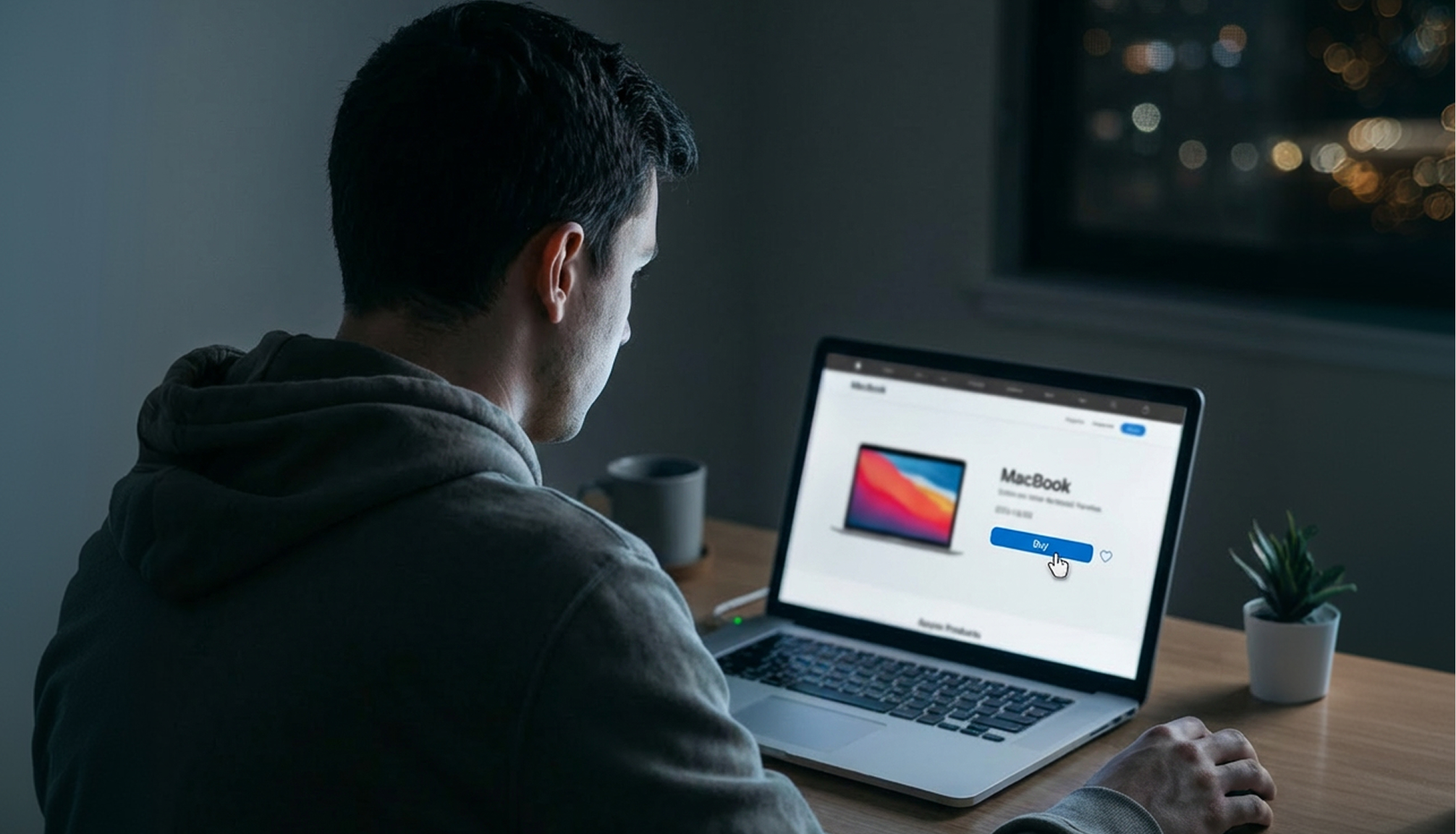
Apple does not put much on its homepage. There are no feature lists, no comparison table, nor any chatbots popping up. All you see is a few products, a line of copy, and space to breathe. That whitespace is not emptiness; it is a signal. It says: we are confident. You are safe here.
Airbnb greets you with one question: Where do you want to go? Neither twenty options, nor a newsletter signup. One question. Because they know that one clear path feels like an invitation, while a maze of choices feels like a chore.
Netflix caps every browsing row at around seven tiles: not eight, not ten. They know that once you exceed what your working memory can comfortably hold, the pleasure of browsing becomes the stress of choosing. Seven keeps it comfortable. Seven keeps you scrolling.
The Part That Stays With You
We tend to think of design as something visual: colors, fonts, and layouts. However, what this research quietly reveals is that design is really a conversation with the human brain. Every pixel is a word in that conversation. Every second of load time is a pause that costs attention.
The websites and apps we love are not just beautiful. They are fluent. They speak the brain’s language: fast, clear, trustworthy, and calm. And they say all of that before we have consciously read a single sentence.
| You have 7 seconds. Not to impress. Just to feel right. After that, the brain has moved on. |
Storyteller